
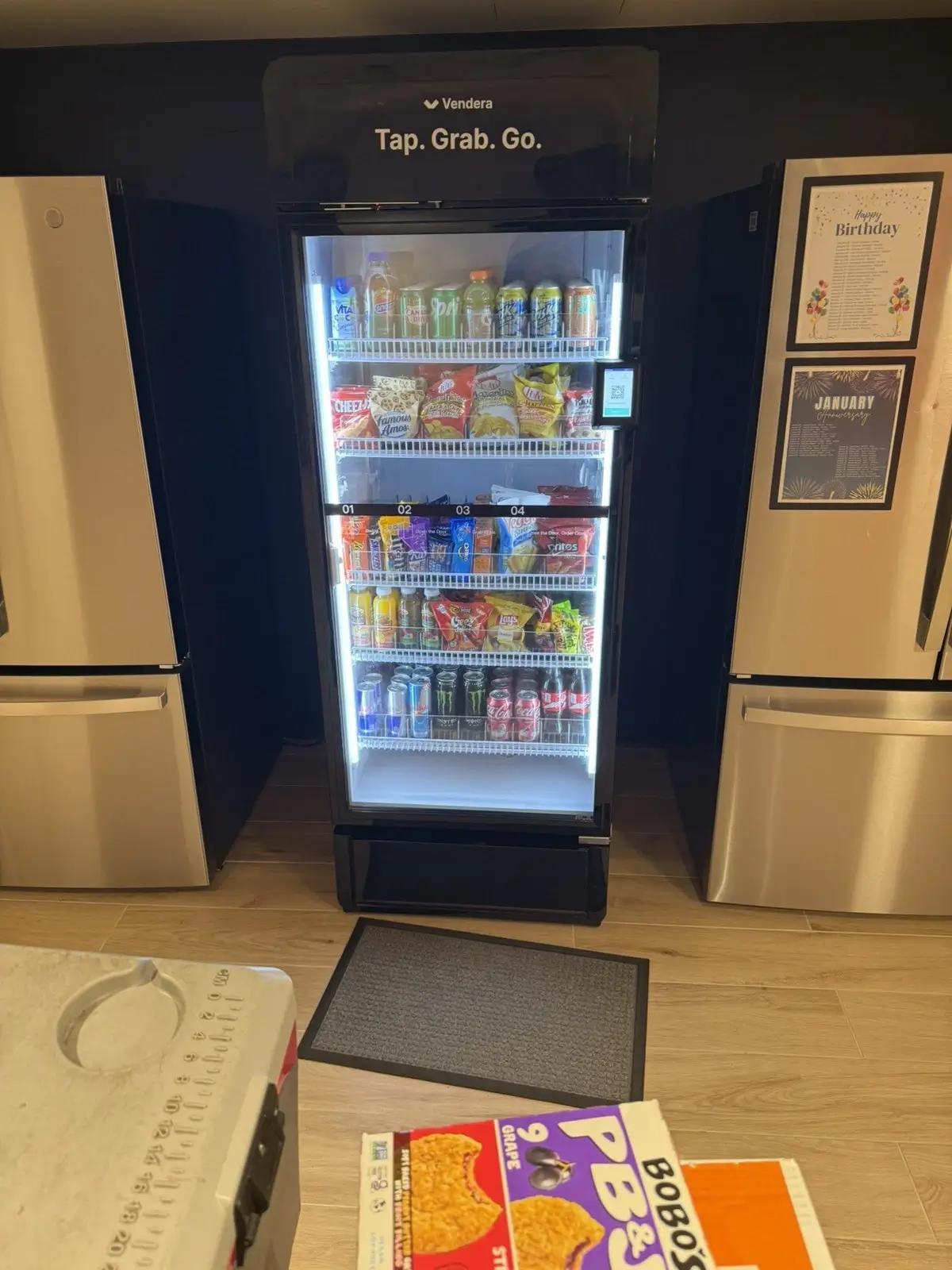
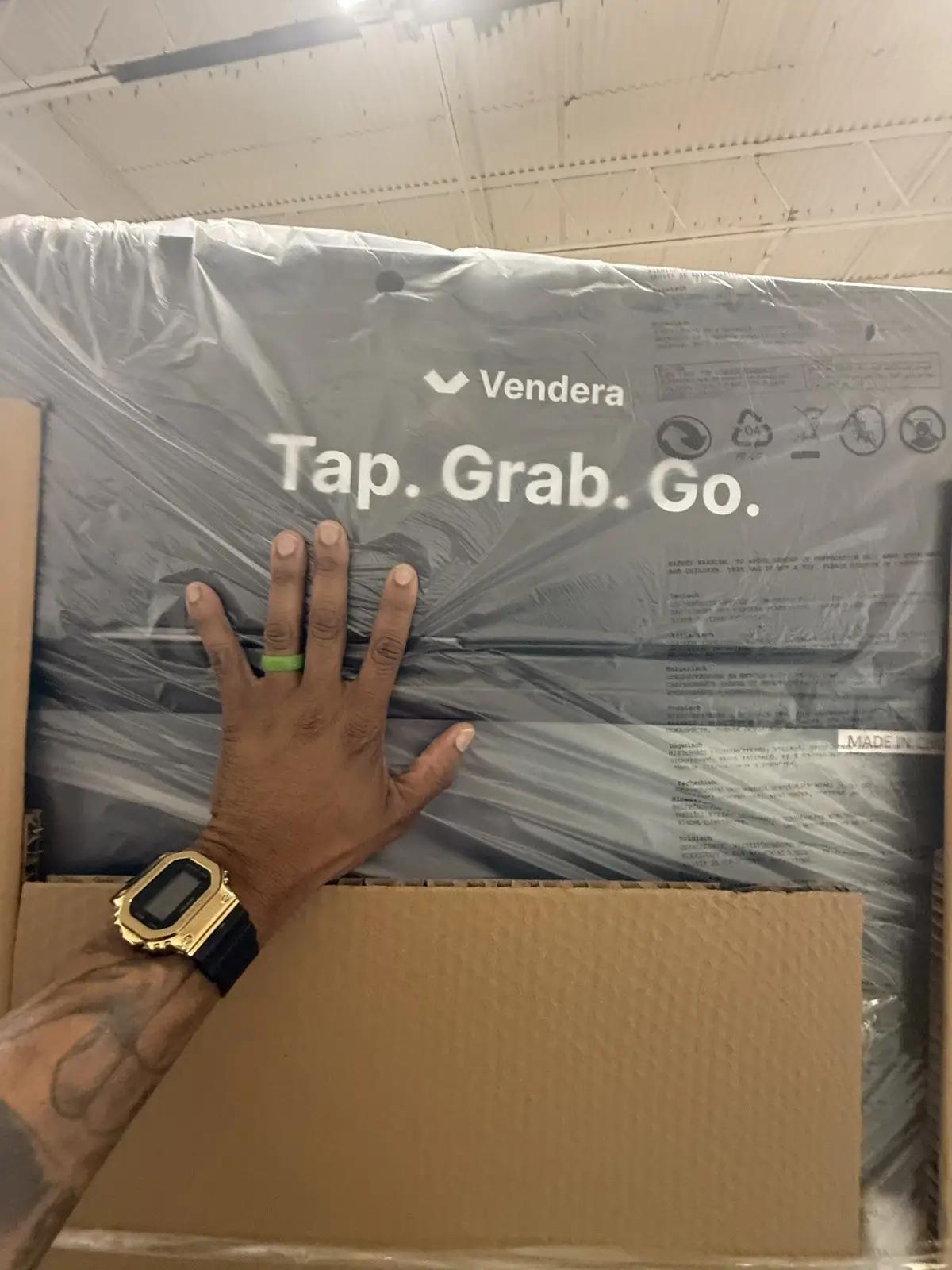

How AI Vending Machines Work
A genuinely AI-powered vending machine relies on a few core technologies working together, not just a touchscreen or card reader bolted onto a traditional cabinet. According to Neuroshop’s breakdown of the underlying technology, high-resolution cameras inside the unit track what a customer removes from the shelf, identifying items by shape, color, and packaging, with leading systems achieving over 99% accuracy while completing transactions in under 30 seconds. Weight sensors beneath each shelf cross-verify that identification — if the camera sees a hand reach for an item and the sensor detects a matching weight change, the system registers the sale with high confidence. The customer simply taps a card or phone to unlock the door, takes what they want, and closes it; the charge happens automatically.
This is different from a “smart” vending machine in the more limited sense — a machine with cashless payment and remote inventory monitoring but still using traditional coil or drop mechanisms to dispense one item at a time. AI vending removes that mechanical dispensing step entirely in favor of open-shelf, grab-and-go access.
Why Buy AI Vending Machines for Sale Now
The appeal for operators comes down to a few specific advantages over traditional vending equipment:
- Faster transactions. Checkout typically completes in under 30 seconds once the door closes, compared to the multi-step process of selecting and paying on a traditional machine.
- Higher-margin product flexibility. Because there’s no mechanical dispensing system to accommodate, AI-powered vending can stock a wider mix of product shapes and sizes than traditional coil-based vending machines.
- Reduced theft and shrinkage. Continuous camera monitoring and pre-authorized payment make it harder for a customer to walk away without paying, compared to an open cooler with an honor-system payment model.
- Detailed sales data. Because every item is individually tracked by computer vision, operators get item-level sales data rather than just aggregate machine revenue.
What to Check Before You Buy
Recognition accuracy. Leading systems claim accuracy rates above 99%, but this depends heavily on lighting, camera placement, and how distinct the stocked products look from one another. Ask specifically about real-world accuracy, not just the manufacturer’s lab-tested number.
Internet and connectivity requirements. Autonomous vending systems like this depend on a stable internet connection to process transactions and sync inventory data — confirm the location has reliable connectivity before committing.
Setup and calibration. Some systems ship largely pre-calibrated; others require more involved setup to train the recognition system on your specific product mix. Ask how much of this is handled before delivery versus on-site.
Ongoing software and support costs. Unlike a traditional mechanical vending machine, the AI and connectivity layer often comes with a software subscription or support fee — factor this into your total cost of ownership, not just the machine’s purchase price.
Refrigeration needs. Many of these systems are built as smart coolers for drinks and perishables; confirm whether the unit you’re considering includes refrigeration if your product mix needs it.
How Much Do AI Vending Machines Cost?
AI vending machines cost significantly more than traditional vending equipment, reflecting the cameras, sensors, software, and connectivity involved. Based on current pricing across several U.S. commercial suppliers, most legitimate commercial-grade units fall between roughly $3,500 and $10,000, with entry-level smart combo and cooler units near the lower end and larger refrigerated or specialty units near the upper end. Premium or high-capacity formats can run $15,000–$25,000 or more. Budget units advertised well under $1,500 typically come from overseas wholesale platforms and generally use simpler single-camera recognition without the accuracy or U.S.-based support of commercial-grade systems — worth keeping in mind if you come across a price that looks unusually low.
The hardware purchase is also rarely the full cost. Many systems carry an ongoing monthly software or AI recognition fee on top of the upfront price, separate from standard payment processing fees — factor that into your total cost of ownership rather than comparing on sticker price alone. Contact MapleVend for current pricing and available configurations.
Specifications
| Feature | Details |
|---|---|
| Technology | Computer vision + weight/shelf sensors |
| Payment | Card, mobile wallet, app |
| Connectivity | Internet required |
| Remote monitoring | Yes — stock, sales, fault alerts |
| Refrigeration | Available on select cooler models |
| Checkout | Grab-and-go, under 30 seconds |
| Inventory tracking | Real-time, item-level |
| Installation | Indoor commercial locations |
Exact accuracy rates, dimensions, and connectivity requirements vary by manufacturer and model, so these figures are a general reference rather than a single unit’s spec sheet — browse the full shop or get in touch for exact specifications once you’re comparing specific machines.
Product Capacity
Capacity varies quite a bit by model and product size. Entry-level AI smart combo units commonly hold around 300 items across 6 product slots, while larger smart fridges and high-capacity formats can support several hundred individual items across multiple shelves. If your location needs a wide product mix — multiple snack and drink categories, or fresh and perishable items alongside ambient snacks — that’s worth confirming against the specific model’s rated capacity rather than assuming one size fits every location.
Warranty & Support
Warranty length and support terms vary by manufacturer, but commercial-grade units commonly ship with a standard 1-year hardware warranty, with extended coverage often available as an add-on for several additional years. Before purchasing, it’s worth confirming three things specifically: how long the hardware warranty runs, whether software and AI recognition support is included or billed separately on an ongoing basis, and whether troubleshooting can be handled remotely or requires an on-site visit if something goes wrong.
Where AI Vending Machines Perform Best
These machines tend to do best in locations with steady foot traffic and customers comfortable with a tap-to-unlock experience — offices, gyms, hospitals, college campuses, and corporate break rooms are common deployments. They’re a bigger investment than a traditional snack or drink machine, so they tend to make more financial sense in higher-traffic spots where the speed and product flexibility translate into meaningfully more sales, rather than in low-traffic locations where a more affordable used vending machine would do the job for less.
Frequently Asked Questions
How much do AI vending machines cost?
They typically cost more than traditional snack or drink machines, reflecting the cameras, sensors, and software involved. Exact pricing depends on the manufacturer and configuration — contact us for a quote once you know your requirements.
How accurate is the product recognition?
Leading systems report accuracy above 99% under good conditions, though real-world performance depends on lighting, camera placement, and how visually distinct the stocked products are from each other.
Do AI vending machines need an internet connection?
Yes. Unlike a traditional mechanical vending machine, AI vending relies on a live connection to process transactions and sync inventory and sales data.
What’s the difference between an AI vending machine and a “smart” vending machine?
A smart vending machine usually means cashless payment and remote monitoring added to a traditional coil-dispensing machine. An AI vending machine goes further, replacing the mechanical dispensing step entirely with computer vision and open-shelf, grab-and-go access.
Ready to talk specifics about AI vending machines for sale? Contact MapleVend for current pricing, availability, and help figuring out whether AI vending is the right fit for your location.

Rachel –
Our employees had been asking for vending options for a while. We finally added a machine to the break area, and it has been easy to stock with the products everyone wants.