
Do vending machines need electricity? Yes — all commercial vending machines need electricity to operate. The power requirements, however, vary significantly depending on whether the machine refrigerates products, how modern it is, and whether it includes features like cashless payment, touchscreen displays, or remote monitoring. Understanding what electrical setup your location needs before a machine is delivered saves time, money, and the headache of a machine that can’t be installed where you planned.
Last Updated: July 2026
This guide covers exactly what power a vending machine needs, how much electricity it uses, what it costs to run, and how to reduce energy consumption once the machine is in place. Browse our vending machine shop or contact us to discuss electrical requirements for a specific model.
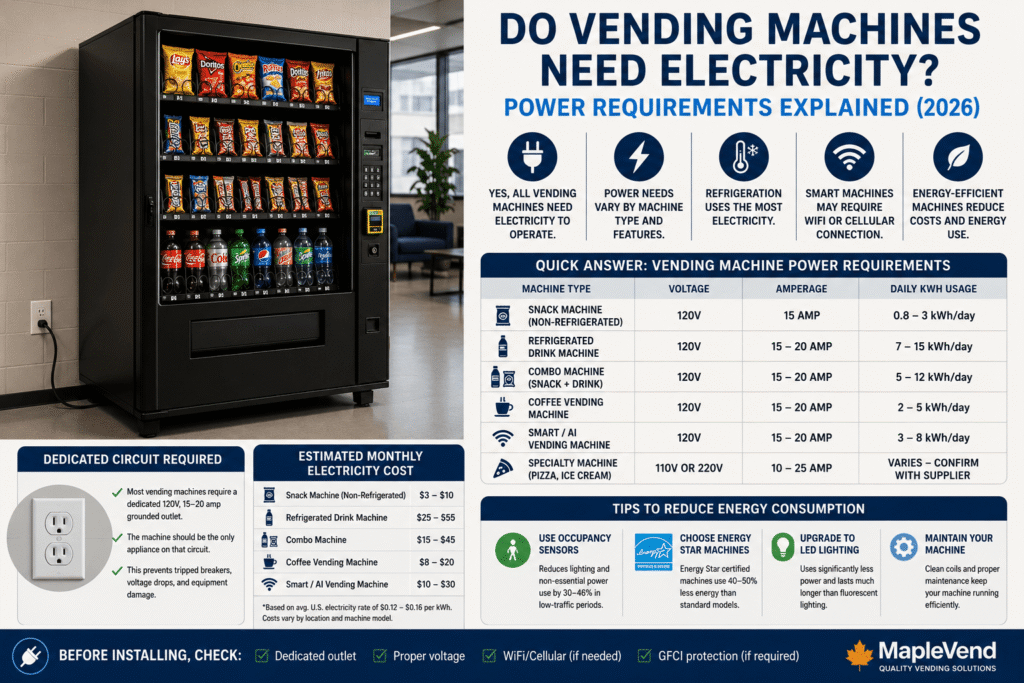
Quick Answer: Vending Machine Power Requirements
| Machine Type | Voltage | Amperage | Daily kWh Usage |
|---|---|---|---|
| Snack machine (non-refrigerated) | 120V | 15 amp | 0.8–3 kWh/day |
| Refrigerated drink machine | 120V | 15–20 amp | 7–15 kWh/day |
| Combo machine (snack + drink) | 120V | 15–20 amp | 5–12 kWh/day |
| Coffee vending machine | 120V | 15–20 amp | 2–5 kWh/day |
| Smart / AI vending machine | 120V | 15–20 amp | 3–8 kWh/day |
| Specialty machine (pizza, ice cream) | 110V or 220V | 10–25 amp | Varies — confirm with supplier |
Do Vending Machines Need a Dedicated Circuit?
Yes — and this is one of the most commonly overlooked electrical requirements. Most commercial vending machines require a dedicated 120V, 15–20 amp grounded electrical outlet — meaning the machine is the only appliance drawing power from that circuit. According to VendingExchange’s electrical requirements guide, a dedicated circuit prevents power fluctuations and ensures stable operation of the machine’s internal components — refrigeration units, coin mechanisms, payment terminals, and digital displays.
Sharing a circuit with other appliances risks tripped breakers, machine malfunctions, and product spoilage in refrigerated units. Before a machine is delivered, confirm with your electrician that a properly rated dedicated outlet is available at the planned location.
Do Vending Machines Need WiFi?
Not always — but it depends on the machine type:
- Standard snack and drink machines — operate fully without WiFi or internet connectivity. Coin, bill, and basic card readers function without a network connection.
- Cashless payment machines — card and mobile payment systems typically require either WiFi or a cellular connection to process transactions in real time. Some systems can store transactions offline and sync when connectivity is restored, but this varies by payment provider.
- Smart and AI vending machines — require consistent power and internet access for remote inventory monitoring, AI-powered product recognition, dynamic pricing, and contactless payment processing. Smart vending machines rely on cloud connectivity for most of their advanced features.
- Remote monitoring systems — any machine with IoT-based inventory alerts, sales tracking, or remote management needs a reliable connection, either WiFi or cellular.
If WiFi is unavailable at your location, cellular connectivity is an alternative for most connected machines, though it typically adds a monthly data fee.
How Much Electricity Does a Vending Machine Use?
According to Vending Machine Papa’s 2026 electricity usage analysis, usage varies significantly by machine type:
- Non-refrigerated snack machines use approximately 0.8–3 kWh per day — equivalent to leaving a few light bulbs on. These machines are the most energy-efficient in the vending category.
- Refrigerated drink machines use 7–15 kWh per day — the compressor running continuously to maintain safe beverage temperature is the primary driver of energy use in this category.
- Annual consumption for a standard refrigerated machine typically runs 2,500–4,000 kWh per year, according to VendingExchange’s energy analysis.
Machine age matters significantly. Older machines from the 1990s and early 2000s can consume 2–3x more electricity than a comparable modern unit, because energy efficiency standards for vending equipment have improved substantially over the past two decades.
How Much Does It Cost to Run a Vending Machine?
| Machine Type | Estimated Monthly Electricity Cost | Notes |
|---|---|---|
| Non-refrigerated snack machine | $3–$10 | Very low — no compressor |
| Refrigerated drink machine | $25–$55 | Compressor is the main cost driver |
| Combo machine | $15–$45 | Depends on refrigeration configuration |
| Coffee vending machine | $8–$20 | Heating element draws power but not continuously |
| Smart / AI vending machine | $10–$30 | Modern units are generally energy efficient |
All figures assume an average U.S. electricity rate of approximately $0.12–$0.16 per kWh. Rates vary significantly by state and provider — operators in California or New York will pay more; those in states with lower utility rates will pay less. Check your local rate to calculate a more accurate estimate for your specific location.
Do Vending Machines Need to Run 24/7?
Since vending machines need electricity continuously, it’s a fair question whether they must run around the clock. Standard vending machines are designed for continuous 24/7 operation — they don’t have an off switch in the traditional sense because turning a refrigerated machine off risks product spoilage and creates temperature cycling issues that can damage the compressor over time. However, there are legitimate ways to reduce energy consumption without turning the machine off entirely:
- Occupancy sensors (VendingMiser and similar). These devices cut power to lighting and some non-essential components when no one is in the area, typically after 15 minutes of vacancy. The compressor continues to run to maintain temperature, but lighting and display power are reduced. Occupancy sensors can reduce energy consumption by 30–46% in low-traffic periods.
- Energy Star certified machines. The EPA’s Energy Star program certifies vending machines that meet efficiency standards for compressors, insulation, and lighting. Choosing an Energy Star certified unit typically reduces energy use by 40–50% compared to a non-certified machine of similar size.
- LED lighting upgrades. Older machines with fluorescent display lighting can draw 100–180 watts continuously just for illumination. Retrofitting to LED lighting reduces this significantly at low cost.
What to Check Before Installing a Vending Machine
- Outlet availability. Is there a properly rated outlet within reach of the planned machine location? Extension cords are not acceptable for vending machines — they create fire hazards and void most machine warranties.
- Circuit capacity. Is the outlet on a dedicated circuit, or does it share capacity with other equipment? Confirm with your electrician before delivery.
- Voltage compatibility. Most machines run on standard 120V. Specialty machines (some pizza and ice cream units) may require 220V — confirm with the supplier before ordering.
- WiFi availability. If ordering a smart machine or a cashless-enabled unit requiring network connectivity, confirm reliable WiFi or cellular signal at the machine’s planned location.
- GFCI protection. Outlets near water sources (break rooms, café areas) may require GFCI protection — confirm with your electrician.
Machine Types and Their Electrical Needs
Do vending machines need electricity equally across all types? No — not all machines have the same power footprint. Here’s how the main categories in MapleVend’s inventory compare:
- Snack machines — lowest energy use in the category; no refrigeration means the compressor cost is zero. A standard outlet is all that’s needed.
- Drink machines — highest energy use due to continuous refrigeration. A dedicated 20-amp circuit is recommended for most full-size beverage machines.
- Coffee machines — moderate energy use; the heating element draws power on demand rather than continuously, making the daily cost lower than a refrigerated drink machine.
- Used vending machines — energy use varies more widely with age and model. Older units may cost significantly more to run. Ask the supplier for the specific machine’s power rating before purchase.
Frequently Asked Questions
Do vending machines need electricity?
Yes — all commercial vending machines require electricity to operate. Power is needed for the payment system, lighting, dispensing mechanism, and refrigeration (where applicable). There are no commercially viable off-grid vending machines for standard snack, drink, or food applications.
What kind of outlet does a vending machine need?
Most standard snack and drink machines require a dedicated 120V, 15–20 amp grounded outlet. The outlet should be on its own circuit — not shared with other appliances — to prevent tripped breakers and voltage fluctuations. Some specialty machines require 220V; confirm with the supplier.
How much does a vending machine cost to run per month?
A non-refrigerated snack machine costs approximately $3–$10/month in electricity. A refrigerated drink machine costs $25–$55/month. Combo and coffee machines fall in between. Actual costs vary based on local electricity rates and machine age.
Can a vending machine run on a regular household outlet?
A standard 120V outlet is technically the right voltage for most machines, but a household outlet that’s shared with other appliances is not suitable. The machine should be on a dedicated circuit to ensure stable operation. Plugging a vending machine into a shared household circuit risks tripped breakers and machine malfunctions.
Do vending machines use a lot of electricity?
Refrigerated machines use a meaningful amount — 2,500–4,000 kWh annually for a standard drink machine. Non-refrigerated snack machines use far less. Modern Energy Star certified machines use significantly less electricity than older models — if energy cost is a concern, prioritize newer or Energy Star certified equipment.
Can vending machines run without WiFi?
Standard snack and drink machines with cash or basic card payment operate without WiFi. Smart machines, AI vending units, and any machine with real-time cashless payment processing or remote monitoring typically require either WiFi or cellular connectivity to function fully.
Looking for an energy-efficient machine for your location? Contact MapleVend to discuss power requirements and find the right machine for your electrical setup — or browse our full range of commercial vending machines for sale.
