


How It Works
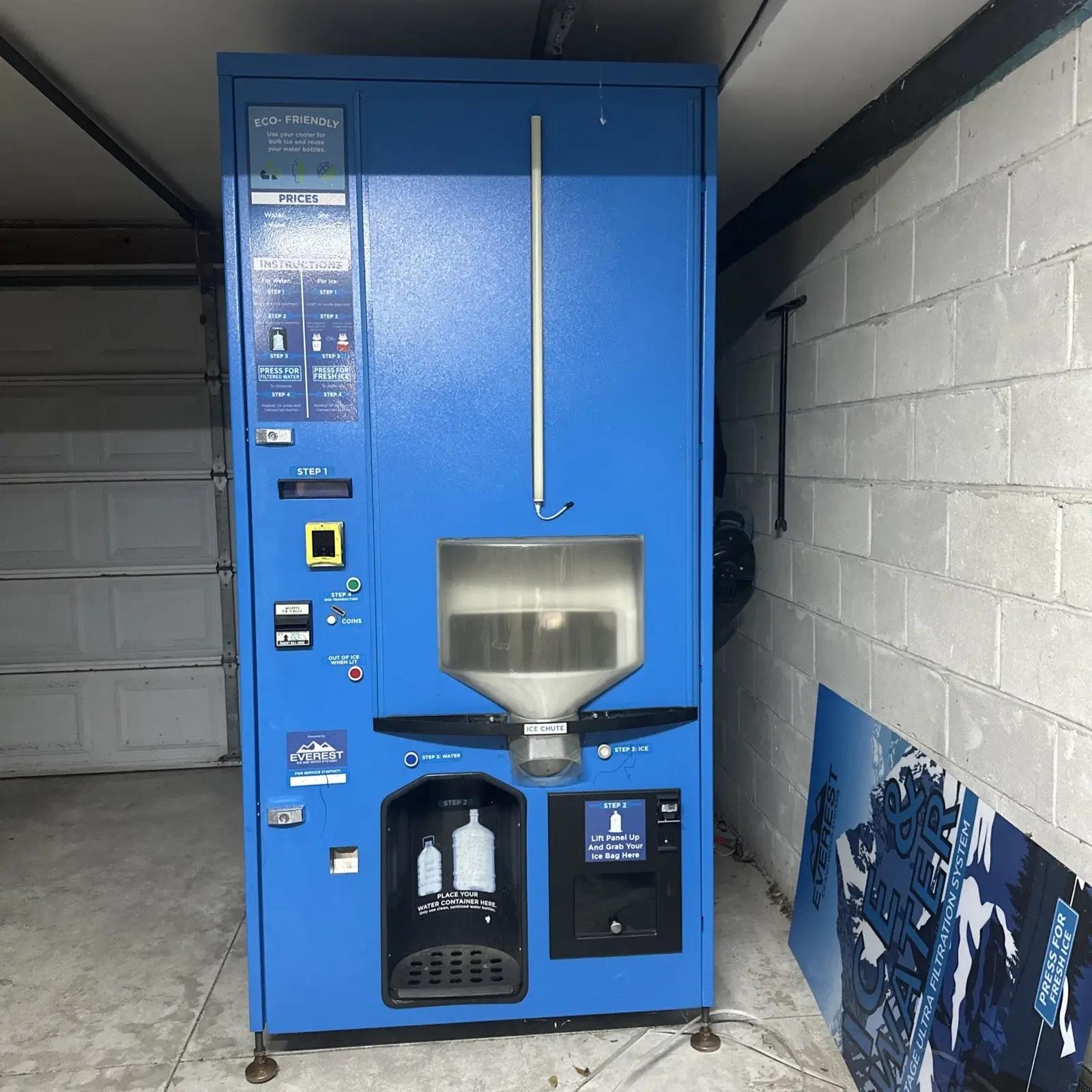
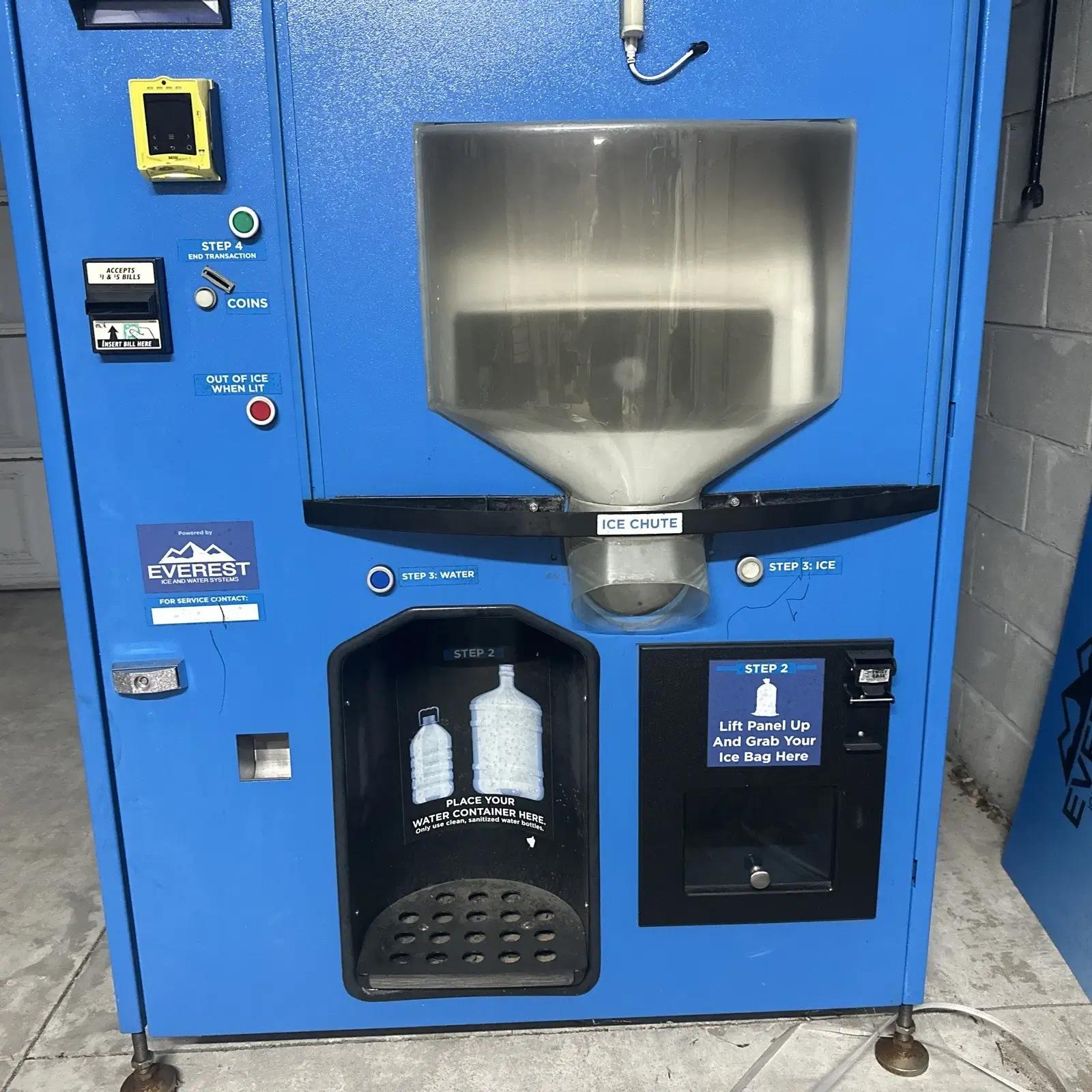
As a self-service ice machine, it connects to a standard water line and filters and freezes the water internally, then bags the finished ice automatically — which is why this category is often called a bagged ice vending machine. Most current models also offer filtered water as a second product line, giving you two revenue streams from one footprint. Because the ice is made on demand rather than trucked in and stored, there’s no spoilage, no missed deliveries, and very little inventory to manage beyond bags and routine filter changes.
Why Buy an Ice Vending Machine for Sale Now
Ice has unusually strong margins for a vending product. A 10-pound bag typically costs somewhere around $0.25–$0.50 to produce once water, electricity, and bagging are factored in, and commonly sells for $2.00–$3.00 — figures reported by both Ice House America and other manufacturers in the space. That puts gross margins well above what most snack or drink categories can offer. It also requires very little hands-on labor — restocking is mostly about checking filters and collecting payment, not constantly refilling product.
How Much Does an Ice Vending Machine Cost?
Pricing depends heavily on production capacity, storage volume, and features like water vending and remote monitoring. According to Naixer’s 2026 cost guide, automated ice vending machines typically range from around $7,000 on the small end up to $80,000 or more for high-capacity commercial units, with mid-tier machines commonly falling in the $15,000–$25,000 range. Larger-format machines built for very high-traffic locations — the kind that can store several thousand pounds of ice and vend hundreds of bags a day — can push past $100,000 depending on configuration.
A commercial ice vending machine for sale sized for a single convenience store or gas station typically falls well below that ceiling; the larger figures mostly apply to multi-unit, high-volume installations.
What This Could Mean for Revenue
To put the margins into perspective: a machine selling 100 ten-pound bags a day at $2.50 per bag would generate roughly $250 in daily gross revenue, or about $7,500 a month, before accounting for water, electricity, site rent, and financing costs. A slower location selling 30–40 bags a day would scale that down proportionally. These are illustrative numbers, not a guarantee — actual sales depend entirely on location traffic, local pricing, and seasonality, and you should treat any specific revenue projection from a manufacturer with the same caution.
Specifications
- Ice production: Continuous on-site production, no manual loading required — published commercial models range from roughly 200 lbs to 2,500+ lbs of daily production depending on configuration
- Storage: Insulated internal bin holds finished ice until it’s vended, with published commercial models ranging from under 1,000 lbs of storage on compact units up to 6,500 lbs on the largest available machines
- Bagging: Automatic bagging, usually in 10–20 lb consumer bag sizes
- Water vending: Many units can also dispense filtered water as a separate purchase
- Payment options: Coin, bill, and card/cashless payment supported on most current models
- Remote monitoring: Available on most current units — sales, ice level, and maintenance alerts viewable remotely
- Footprint and weight: Varies significantly by capacity — compact units are forklift-portable, while large-format machines require a permanent concrete pad and professional installation
- Power and water requirements: A dedicated water line and standard commercial electrical service are required for installation
Exact daily capacity, storage volume, dimensions, and electrical specs vary by the specific unit, so these figures are meant as a general reference rather than a single model’s spec sheet — contact us for exact specifications once you’re comparing specific machines.
What to Confirm Before You Buy
Site requirements. The location needs reliable water access, adequate electrical service, and a level concrete pad sized to the machine’s footprint. Confirming these before delivery avoids costly surprises during installation.
Daily capacity vs. expected demand. A machine sized too small for a high-traffic location will run out of ice during peak hours; one sized too large for a quiet spot adds cost without adding sales. Matching capacity to the location matters more than almost any other decision here. A well-placed high-capacity machine can produce hundreds of bags a day, while a compact unit is built for lighter, steadier demand rather than peak-traffic volume.
Warranty and support. Given the higher price point compared to a typical snack or drink machine, it’s worth confirming warranty length and what kind of manufacturer support is available if something needs service.
Climate considerations. If the location sees real winters, confirm the unit is rated for cold-weather operation or comes with a heating package — not all models are.
Where Ice Vending Machines Perform Best
Gas stations, convenience stores, campgrounds, RV parks, marinas, and supermarket parking lots tend to be the strongest locations — anywhere with reliable vehicle access and customers who already buy ice as part of their routine. They’re a weaker fit for low-traffic indoor spots, where a standard snack or drink machine usually makes more sense.
Frequently Asked Questions
How much does an ice vending machine cost?
Typically somewhere between $7,000 and $80,000+, depending on production capacity and storage volume. Most single-location commercial units fall in the $15,000–$25,000 range, with larger multi-unit installations pushing past $100,000.
How much can an ice vending machine make?
It depends heavily on location traffic and pricing, but the margins on the product itself are high — ice typically costs a small fraction of its sale price to produce, which is why payback periods on well-placed machines tend to be faster than most other vending categories. Many people get into the ice machine business specifically because of this margin advantage over snack and drink vending.
Do ice vending machines need a special installation?
Yes. Unlike a snack or drink machine that just needs a standard outlet, an ice vending machine needs a dedicated water line, adequate electrical service, and usually a concrete pad for the unit to sit on.
Can ice vending machines also sell water?
Many models can. Filtered water is a common second product line on the same machine, adding a revenue stream without needing a separate unit.
Still deciding whether an ice vending machine for sale is the right move versus a more traditional setup? Reach out to MapleVend and we’ll help you weigh the options against your specific location and budget.


Reviews
There are no reviews yet.